
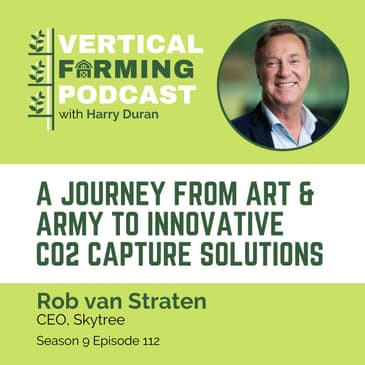
Prepare to set sail on a journey filled with adventure, art, and groundbreaking technology with our guest, Rob van Straten, CEO of Skytree. This episode dives deep into Rob's vibrant life, taking us from his childhood in the 80s, through his time in the army, his global sailing adventures, and leading us up to his stellar rise in the tech world. As a lover of art, Rob shares his memorable experiences from the Vermeer exhibition and the captivating stories behind some of the most iconic artworks.
We also explore the intricate path that led Rob to spearhead Skytree's mission towards ESG (Environmental, Social, Governance) compliance. For those keen on understanding the inner workings of the tech industry, Rob takes us through his career, shedding light on the highs and lows of sales, leadership, and business management. He openly discusses the challenges of transforming intentions into actions, particularly in the realm of responsible business practices. Rob also sets the stage for us to understand the birth and evolution of Skytree's revolutionary CO2 scrubber technology, originally designed for space but now adapted for earthly applications.
Finally, we delve into the world of vertical farming and Skytree's pioneering CO2 capture technology. Rob paints a vivid picture of how his team has harnessed technology to offer a sustainable alternative to CO2 emissions. From capturing CO2 from exhausts to engineering a machine that directly extracts CO2 at a vertical farm's location, Skytree is redefining the game. Rob also introduces us to Skytree's Total Cost of Ownership tool, a unique approach that helps clients understand the real cost associated with CO2. As we conclude our time with Rob, he shares his perspective on the rising industry of vertical farming, emphasizing the importance of collaboration, faith, and understanding. So, come aboard and prepare to be enthralled by this riveting tale of technology, art, and innovation.
Thanks to Our Sponsors
AgTech Marketing Team
Key Takeaways
0:00:00 - Discussion on Art and Career Journey
0:13:14 - Skytree's ESG Compliance Journey
0:28:47 - CO2 Capture Technology for Vertical Farms
0:43:26 - Insights on the Vertical Farming Industry
Tweetable Quotes
"We all know greenwashing is sort of an intermediate stage between awareness and really doing things. Oh, let's say we do this. We can defend that with a little bit of fantasy and you can criticize it, but it's also a step, a step in the right direction, and then public outcry on greenwashing will repair that soon, because that's the worst thing that can happen to your reputation."
"There's no choice. But it's difficult because of our climate issue and there's no job anymore. But the difficulty is always that it's easy to talk about what we should do. It's difficult to change your own behavior. But recently we see recognition that actually the world will survive, the planet will survive, but it's people that will be in trouble."
"I just saw the opportunity and maybe that blindsided me a little bit for the risk, you know. Then, yeah, I mean you dive into it because you think you know it's a gut feel we can make this work."
Resources Mentioned
Rob's Linkedin - https://www.linkedin.com/in/robvanstraten
Rob's Website - https://www.skytree.eu/
Rob's Email - robvanstraten03@gmail.com
Connect With Us
VFP LinkedIn - https://www.linkedin.com/company/verticalfarmingpodcast
VFP Twitter - https://twitter.com/VerticalFarmPod
VFP Instagram - https://www.instagram.com/direct/inbox/
VFP Facebook - https://www.facebook.com/VerticalFarmPod
Subscribe to our newsletters!
AgTech Digest - https://agtechdigest.com
The Indoor Farmer - https://www.indoorverticalfarm.com/
Horti-Gen Insights - https://www.hortigeninsights.com/
Sponsor Links
Cultivatd’s Website – https://cultivatd.com/
Cultivatd’s Instagram – https://www.instagram.com/cultivatdco/
Cultivatd’s Twitter – https://twitter.com/cultivatd
Cultivatd’s Facebook – https://www.facebook.com/cultivatd/
🎙️🎙️🎙️
Podcast Production and Marketing by FullCast
Discover the best podcast services in the world at The Podosphere: https://www.thepodosphere.com/
Mentioned in this episode:
2025 Precision Ag Report by iGrowNews
2025 Precision Ag Report by iGrowNews
[00:00:00] Our next step in the journey is to go into other use cases that are also super important.
[00:00:06] Production of protein or green hydrogen or to contribute technology to all these removal
[00:00:14] projects that are now all eventing the wheel. So we will in my vision supply technology to
[00:00:19] all those projects as well. So I feel it's CEOs and founders of the leading vertical farming companies from around the world and I'm showing no signs of slowing down, having great conversations week in and week out. I'm your host, Harry Duran, podcasting since 2014 with my first show, Podcast Junkies, and founder of Fullcast, our full service done for you podcast agency. In case you missed last week's episode, we spoke with Ralph Weir of Zaindew. We talked a little
[00:01:43] bit about his Scottish origins, his leadership, and managing through challenging times. The Rob takes us through his career and sheds light on the highs and lows of not only leadership and business management, but the challenges of transforming intentions into actions, which resonates with me always as an entrepreneur. We talk about Skytree's revolutionary CO2 scrubber technology, which was originally designed for space, but now being adapted for applications
[00:03:00] in the world of vertical farming.
[00:03:01] Rob shares with us Skytree's total cost of ownership tool,
[00:03:04] which is unique approach that helps clients understand
[00:03:07] the real cost associated support this show. Mark your calendars for the CEA Summit East in Danville, Virginia from September 19th to the 20th, 2023. This two-day event, co-hosted by Indoor AgCon and the Virginia Tech IALR Controlled Environment
[00:04:23] Agriculture Innovation Center, brings businesses and association members. Booths are still available and exhibitors are welcome. Partners for the conference include the Abu Dhabi Agriculture and Food Safety Authority, Dutch Greenhouse
[00:05:42] Delta and Wagenbegen University, which, but a lot of people consume this on audio so they don't have the pleasure of the face to face interaction that we're having right now. And I can't help but notice you've got some very interesting artwork on your wall. Oh, wait, you see this? Wow. But I was lucky enough to take an arts and ideas class when I first went to college and university. And I didn't know. And I was immediately drawn into just the world of all the artists, a lot of Dutch, very famous Dutch artists with a lot of history. And of what you were planning to do, where you were looking to move, and what you were thinking about a career at that point. Oh, I wasn't thinking about a career at all, I thought I'd say. Most of us are not. No, and my journey wasn't maybe a little bit atypical,
[00:09:41] as I first served in the army,
[00:09:43] and then I was a sailor for a couple of years,
[00:09:46] wandering around the world. they're running companies and it sort of happened to me. It wasn't like I had this career path. Yeah, that's the way life usually goes. Is there one story from your days sailing that is memorable that you can run? Oh, many, many stories. I'm sure you have many. I'm not sharing. But yeah, so I was at a tanker, a small tanker,
[00:11:04] not an oil tanker, that we're all using the same resources, and it's a limited supply of resources. And I think when we're in our own bubbles, you know, we lose sight, we only focus on what we need for ourselves to get through the day. And I think it's really, it's happening more and more now, I feel hopeful, you know, we've gone through cycles, and we'll talk about that as well. But I think that awareness and do you see
[00:12:23] that's what was happening for you sort of like an through your career, which was the first position where you held the role of CEO? That was quite a while back. That was been CEO a couple of times, smaller IT focused companies in the
[00:13:42] time that we building the internet.
[00:14:46] me because I remember in the dot com days, everything seemed like this world of possibility. I remember the first time I discovered the internet that there's something beyond AOL
[00:14:50] and you're like peeking behind the curtain. It was like, Whoa, what's this?
[00:14:53] Imagine that you would read a newspaper on your computer, right? Yeah. And then the iPhone
[00:15:01] came and I've been reading science fiction books in my younger years, when people had 64. That was an IBM mainframe. I think it was a 3080 if I remember well. I was working at a bank. Okay. Was that punch cards or the big floppy disks? Yeah, I thought we were switching from the punch cards at the time. And we were playing moon landing. Oh, wow. You have a screen to see you actually land on the moon. You had like this print output,
[00:16:23] you know, with the feedback of the data. I spent a lot of time in with US customers as well. And then the team became, we sort of had a stove leadership and I shared
[00:17:41] with many audiences around the world.
[00:17:43] Do you have to comply or should you wish to comply?
[00:18:43] in the way that you should because you want to and your customers want you to.
[00:18:45] So that was my first experience.
[00:18:47] Then I went, that included GNS.
[00:18:51] And then I went into environmental
[00:18:53] by joining a large manufacturer of EV charging equipment
[00:18:58] and software to support electrification of transport.
[00:19:02] And all those roles were global roles.
[00:19:05] So I'm comfortable at the top. And then the tone needs to convert in being real about it.
[00:20:23] And we all know,
[00:20:24] greenwashing is sort of an intermediate stage recognition that actually the world will survive, the planet will survive, but it's people that will be in trouble. Yeah, very good point, very well said. So take us back to the moment when you started coming up with the idea for Skytree, who else was involved, and share with us a little bit about that journey. Yeah, so why I have to apologize because Skytree is not my idea.
[00:22:46] tried, no, I should say they brought the technology from space to terrestrial conditions. Now, imagine in space, you have vacuum, so you can move around gases. You don't have weight. That makes it
[00:22:53] easy to build a big machine. You have space, unlimited space in space and from the European
[00:23:00] Space Agency. Now you bring it to terrestrial process so you have to.'t buy it from you. Yeah. Got a super big elephant won't buy these critical devices from the mouse. The Skytree were with eight people at the time.
[00:25:40] And he said, yeah, I kind of know idea and we should, but then, yeah, this is the very short version, but then the conclusion was that I should be the CEO as he didn't have a clue how to build a company that could do that. So we're still dear friends, but I came in as CEO of Skytree,
[00:27:01] unofficial for a couple of months,
[00:27:03] and then first of April last year, 2022,
[00:27:06] I was formally appointed as CEO, advance with that technology. That's only handful in the world. And Skytree was already at that point. It never had any strategy to industrialize it, right. And to build an organization that can bring that successfully to the market and then, you know, service it and build channels and what have you. So I thought, well, that's the easy part.
[00:28:21] That's what I do.
[00:28:23] But you know, the technology was there.
[00:28:25] It was supported by, I think it was 15 patents at the time.
[00:29:26] the agri-tech environment. So our lead investor is a Dutch firm called Horticope. They are collectively owned by 400 Dutch greenhouses. So that's the next market we will enter into
[00:29:33] after vertical farming. And then the co-lead was the yield lab, also agri-tech, early stage investor.
[00:29:40] And they clearly recognized the value that we could connecting to potential clients. I was interviewed by TechCrunch
[00:32:04] client for Skytree and in terms of, and maybe you can explain some of the different ways farms or anyone who could be a potential client to think about how to apply this in their
[00:32:09] environment.
[00:32:10] Yeah.
[00:32:11] So our beachhead market, as we call it, is vertical farming, which will be followed by
[00:32:15] greenhouses.
[00:32:16] The difference is vertical farming is more closed than a greenhouse.
[00:32:22] And in vertical farming, we have artificial daylight. Then the CO2 is a bit toxic, so it has to be cleaned and purified, then it has to be liquefied, then it has to be loaded on a truck and the truck will bring it to the vertical farm. And what I found in my conversations with vertical farms who want to be very sustainable and are good people is that they use the worst emissions that there are,
[00:33:43] directly from an oil company and that CO2 molecules on the way until it goes into the There are two topics that are immediately coming up in any conversation. One is people are pleasantly surprised. They say, oh, that's cool. Yeah, I should switch, right? Then quickly it comes to what are the costs? To help people understanding their current costs, we usually ask a few questions like
[00:35:04] what are you paying currently kilogram CO2 based on the values you put in, what you currently pay, your length of depreciation and all those good things that is your data. We just sell you the machine. Yeah, what I've seen with services like this is providing people with the tools to educate
[00:36:22] themselves, calculators to figure out the ambient air, what would it do for their carbon footprint? So we help them with that.
[00:37:41] Obviously for some folks, it's a lot of education process.
[00:37:44] So are you getting good conversations
[00:37:46] and the feedback from your team in these conferences about maybe six months, you know, to a year. What are you thinking? Yeah, a year is a long time, but six months. We have visibility. Yeah, six months. Yeah, in a couple of months, we will open shop, as we say, we will start selling as we're ready for it and process purchase orders for 10 kilogram a day unit. You can stack them if
[00:39:01] you need 20 or 30. Then we will simulations, build prototypes and pilot units. Then we come across a new roadblock that we didn't see coming. And sometimes, yeah, you get a little bit desperate and my wife knows, the machine knows when there's something. Oh yeah.
[00:40:20] So then I have to confess.
[00:40:24] You can't hide it.
[00:41:25] that I consider as an important company. Our next step in the journey is to go into, you know, other use cases that are also super important, like production of protein or green hydrogen,
[00:41:34] or to contribute technology to all these removal projects that are now all eventing the wheel.
[00:41:40] So we will, in my vision, supply technology to all those projects as well.
[00:42:45] like our gender balance, you know, because I think that's not what we should do, not use it in marketing, but in a more sincere way.
[00:42:49] Yeah.
[00:42:50] And my next step in my journey after I hand over the home to somebody else is to help
[00:42:56] other companies to also be good companies, because I want to be responsible for building
[00:43:01] the company, how companies should be has to be more sharing of technology.
[00:44:20] And there's a lot of similarity in what we do and in vertical farming.
[00:44:25] But let's been in various industries,
[00:45:43] held leadership roles in various industries, has're there. Our US team is there. So I'm glad I said that. I so appreciate that. Rob, thank you so much for this conversation. I really enjoyed getting to hear your story. It's very inspirational, and I love to see all the different ways that people are participating in this industry. So I appreciate you and your time.
[00:47:00] Likewise, Harry. It was a pleasure talking to you.
[00:47:03] Thanks again for listening. As always, e to tune in next week for a conversation with yet another fascinating leader from the world of vertical farming. Until we meet again, here's to your health. Thanks for listening. To read the full show notes for this episode, which includes any links mentioned in the episode, as well as a full show transcription,