
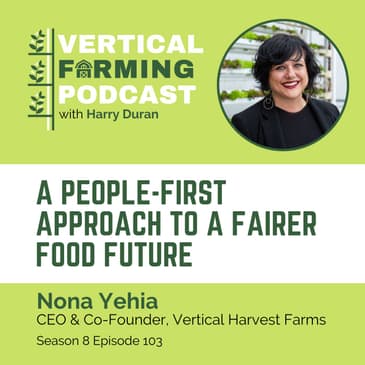
Get ready for an enlightening conversation on vertical farming and food justice as we chat with Nona Yehia, CEO and co-founder of Vertical Harvest. Discover the growing importance of indoor ag tech and understand the significance of intersectional discussions within this evolving industry. Learn how fresh food access and Controlled Environment Agriculture (CEA) are playing a crucial role in fostering positive change, and how technology is championing this transformation.
Join us as we discuss Vertical Harvest's expansion and their people-first approach. Nona shares how their commitment to diversity and inclusion has helped the company stay agile and adapt to the ever-changing industry. Hear about the development of the Grow Well Employment model and how understanding community employment needs has shaped their success. We also delve into the critical role of transparency in this maturing industry.
Lastly, we reflect on the challenges and triumphs of the CEA industry. Uncover how technology and innovation can empower people, augment teams, and create smarter and better ways of working. Nona reveals Vertical Harvest's approach to prioritizing yields and production alongside people while optimizing costs. Don't miss this insightful conversation about the importance of having a strong vision, mission, and transparency in creating a sustainable business within the vertical farming industry.
Thanks to Our Sponsors
Cultivatd – https://cultivatd.com/
Indoor AgCon '22 - https://indoor.ag/
Use promo code 'VFP' to receive 20% your registration
Key Takeaways
- 0:01:48 - Food Justice and Access 0
- :06:13 - Vertical Farms as Urban Infrastructure
- 0:11:44 - Building Templates for Farm Success
- 0:17:23 - Employment Model for Community Growth
- 0:26:18 - Vertical Harvest's Community Impact in Detroit
- 0:34:24 - Democratizing Access to Fresh Food
- 0:45:15 - AI and Innovation in Food Production
- 0:53:50 - Social Media for Team Connection
Tweetable Quotes
"The promise of Controlled Environment Agriculture (CEA) lies in the tech, of course, but the tech is there for a reason. Why do we use the tech, and why is it important? And why is it not only important to investors, bu
t why is it important to you, your family, your neighborhood, your city?" "We have shown that access to this very exciting space can be democratized right. And our farmers, who, prior to Vertical Harvest, were washing dishes, cleaning hotel rooms, that's all great. We got to start somewhere. But now they have fed our community good food, healthy food, food that inspires fresh food, and now they're leading the charge in Maine."
"This isn't only about Vertical Harvest or everybody else. This is about something whose time has come because people need it. I think we're close to unlocking that, because this is a movement.”
Resources Mentioned
Nona's Linkedin - https://www.linkedin.com/in/nona-yehia-3b2266a/
Nona's Instagram - https://www.instagram.com/verticalnona/
Nona's Email - nona@verticalharvestfarms.com
Connect With Us
VFP - LinkedIn - https://www.linkedin.com/company/verticalfarmingpodcast
VFP Twitter - https://twitter.com/VerticalFarmPod
VFP Instagram - https://www.instagram.com/direct/inbox/
VFP Facebook - https://www.facebook.com/VerticalFarmPod
Vertical Farming Jobs - http://verticalfarmingjobs.com
Vertical Farming Weekly - www.getrevue.co/profile/verticalfarmingpodcast
Sponsor Links
Cultivatd’s Website – https://cultivatd.com/
Cultivatd’s Instagram – https://www.instagram.com/cultivatdco/
Cultivatd’s Twitter – https://twitter.com/cultivatd
Cultivatd’s Facebook – https://www.facebook.com/cultivatd/
🎙️🎙️🎙️
Podcast Production and Marketing by FullCast
This podcast uses the following third-party services for analysis:
Chartable - https://chartable.com/privacy
[00:00:00] The world of agriculture technology is vast and constantly evolving, with new innovations and companies emerging at a rapid pace. At AgTech Media Group, we understand the importance of staying updated and connected in this dynamic industry, and that's why we're thrilled to announce the launch
[00:00:14] of our new AgTech company directory, a comprehensive and user-friendly resource designed to help navigate the complex landscape of AgTech innovators. More than just a list, it's a curated collection of companies leading the charge in transforming the AgTech sector from startups
[00:00:28] pioneering new farming methods to established companies adopting cutting-edge technologies. Our directory spans a wide range of leaders dedicated to advancing agriculture through technology. Whether you're a farmer looking for the latest in crop monitoring tools and investors seeking promising AgTech startups, or a researcher interested in sustainable farming practices,
[00:00:45] AgTech Directory is designed to cater to your specific needs. You can filter by sector, technology, size, or location to find exactly what you're looking for. To learn more and to claim your company listing, visit agtechcompanies.com. If you are starting a vertical farm and don't
[00:00:59] know where to begin or which technology would suit your needs, then reach out to the experts at Cultivated. As indoor farm brokers, they help connect you to the right technology and ensure your project is successful. Best of all, their service is free because they work on behalf
[00:01:13] of their partners. Visit Cultivated.com to learn more. And that's spelled C-U-L-T-I-V-A-T-D dot com or click the link in the show notes. How do you build a template for if you are reconnecting
[00:01:29] the farm to the urban center or you are creating a farm that is able to operate your round? How do you train people to be able to access that new technology and access this? So from
[00:01:45] pretty much every aspect of running the business, that's what we're laser focused on. Creating templates for success. Welcome to the Vertical Farming Podcast, weekly conversations with fascinating CEOs, founders and agtech visionaries. Join us every week as we dive deep into
[00:02:08] the world of vertical farming with your host, Harry Duran. Vertical Farming Podcast season eight, we are at episode 103. Great return guest today and I'll share that with you in a second.
[00:02:22] But if you are a regular listener, I want to give you high five. Thank you for coming back and joining this show weekend and week out without you as the listener. I wouldn't have a show,
[00:02:31] quite honestly. So I really appreciate you taking time out of your busy schedule, your busy day to listen in on these stories. And I hope you have as much fun listening as I do recording and having these conversations and educating myself and you with everything that's happening
[00:02:46] in this space. It's happening at such a fast pace. It's crazy to think how much is happening that I want to share with you conversations, new folks, new CEOs, new founders, new technologies, all that
[00:02:57] and more. If this is your first time listening, you're in the right place if you're looking for a show where I interview fascinating CEOs and founders of the leading vertical farming companies from around the world. My name is Harry Duran and I've been podcasting since
[00:03:10] 2014. Crazy. We're closing in on 10 years. This show has been going gangbusters since 2020, March of 2020. That's crazy to think about it and I've been enjoying the ride ever since. We had a two-parter this week, last episode. We spoke to Kiana Mickey, the director of
[00:03:28] Urban Agriculture for New York City. We had a fantastic conversation about all things food justice, food security related. Her experience has grown up in New York City and all the great work
[00:03:41] they're doing with the mayor's office there. So please check that out if you haven't done so already and it's going to be great to have connected with her at the conference as well. Speaking
[00:03:51] of the conference, another speaker will be this week's guest, Nona Yahia, returning back for round two on this podcast. Nona never disappoints. She's just gotten enthusiasm and energy about the industry that I really find infectious. We talked about food justice and access. We
[00:04:07] talked about vertical farms as urban infrastructure, which is very interesting. They've got a project coming up in Maine, which is very exciting to see and I can't wait to have you listen to her talk all about it. We talked about the importance of building templates for farm success,
[00:04:23] the employment models she's using for community growth and what their impact is going to be on these communities like Maine, like Detroit, how we democratize access to fresh food, so many other things that really light me up, light my heart up and I can't think of a better
[00:04:40] spokesperson for all the positive that's happening in this space. If you find you're getting value from this episode or any of our past episodes, please leave us that rating and review. Ratethispodcast.com forward slash VFP. I'd love to read yours out next.
[00:04:53] And remember, I want you to focus on these conversations. Just go to vertical farmingpodcast.com to read the full show notes for each episode. It's going to include all the guest links as well. Okay, before we jump into this conversation with Nona round two,
[00:05:06] here are a few words from these amazing folks that continue to support this show and to whom I'm eternally grateful. This year, Indoor Ag Tech is coming to New York City's Times Square and it's bringing together the world's leading growers, retailers, tech providers,
[00:05:19] seed companies and investors. Join us from June 29th to June 30th to meet, expand networks and produce fruitful partnerships. The team has been gracious enough to provide listeners of this show with an additional 10% off up the registration. Simply use promo code
[00:05:34] VFP when you register and lock that in. And by the way, if you're on the fence, remember that early bird discount ends on May 11th. After a pivotal year for CEA, the summit will explore
[00:05:44] what's needed to ensure the industry can continue innovating and growing into a crucial part of the global agri-food supply chain. Mark your calendars for the CEA Summit East in Danville, Virginia from September 19th to the 20th 2023. This two day event co-hosted by Indoor
[00:06:00] AgCon and the Virginia Tech IALR controlled environment agriculture innovation center brings businesses and academia together to help you grow your business. Immerse yourself in a full lineup of research showcases, panel discussions and keynotes featuring top experts,
[00:06:14] grower operators and other thought leaders. Explore the latest CEA innovations from tabletop exhibitors. Enjoy quality networking opportunities. Don't miss this unique opportunity to attend a conference at a research facility where you can get a firsthand look at cutting edge research
[00:06:28] projects happening right now and explore ideas for collaboration with Virginia Tech and IALR researchers as well. Vertical farming podcast listeners can save 10% off the standard passes with code VFP. Visit ceasemmit.com for more details and to register.
[00:06:45] So officially, Nona, Yahya back from round two and Vertical Farming podcast. Thank you so much for getting us caught up. There's so much good stuff happening and I'm excited to chat and also
[00:06:55] to see you in New York in less than 10 days probably in nine days. I'm so happy to be back here with you, Harry. You're one of my favorite shows my weekend routine and then very much looking
[00:07:10] forward to the yearly trip to New York. Yeah. How often do you get back? Is that it just that one trip? Oh no, I get back a lot but I think indoor ag tech is always a fun reason to gather and it
[00:07:22] takes on its own quality for sure. It feels like it's picking up steam or visibility. Do you get that sense as well? Yeah. I mean, I think that just being in this space as long as I have,
[00:07:35] I have seen it pick up steam and visibility especially I think what's really exciting for all of the big ones indoor ag con and door ag tech, the intersectionality that's starting to occur
[00:07:48] right? It's not just for producers. It's not just about the tech and you know the right seed but it's about the impact and I think that has been particularly exciting to me and to watch it
[00:08:01] on different socials who's paying attention, you know who's going to these conferences and why that has been really interesting to see evolve. You know it's also in terms of talking about the intersection of like our relationship and conversations we've had and seeing you in
[00:08:17] the right con. I had pretty much the whole panel now on the show I've had from indoor ag con. So I've had Catherine Scala on and Alaric Overbay and it was one of the best
[00:08:27] just high vibe sessions for me because of the topic because it's something a lot of people don't talk about like in the beginning I think the vibe was focused on the tech and the investment coming in and the big projects but really like boots on the ground impact
[00:08:43] to individual neighborhoods, individual people changing perceptions of like what it means to have access to fresh food and it's always nice to see like you're like always connected to these conversations. Like you're also doing a panel at indoor ag tech with Keanu who I spoke with.
[00:08:58] Keanu from New York City is going to be on she's the director of urban agriculture and we chatted yesterday so a great conversation with her and so I'm curious like how you think
[00:09:09] about this and we're going to talk about the new projects coming up but like why specifically this feels like important to you to make sure that this is top of mind for people to decide this food security, food justice, you know how are you going to frame it?
[00:09:22] Well I think Harry comes from the way that I've built my career and my profession. I'm an architect by trade and I think that architects by their very nature are problem solvers and I
[00:09:33] think we've talked about that before right and for us at Vertical Harvest we see the way that we've addressed these problems as a kind of an ecosystem of opportunity right and it's something that
[00:09:52] and I really enjoyed the conversation that you've been having lately and coming off that panel. I was very proud of that to be able to be part of bringing those voices together and I think that
[00:10:03] you know the promise of CEA lies in the tech of course but the tech is there for a reason why do we use the tech right? Why is it important and why is it not only important to investors
[00:10:17] but why is it important to you, your family, your neighborhood, your city and I've always been rooted in that question right and how do we really leverage those opportunities to build something
[00:10:31] that is meaningful and lasting and I think that's why being a part of those conversations are so important because that perspective is how this industry will actually win hearts and minds and become a movement which it absolutely needs to whether investors are important I mean our
[00:10:52] you know kind of hands off the industry right now the problem with food is not going away right it will be the defining issue of the 21st century so we need to be able to support
[00:11:02] different voices that are really making a difference in this industry as well as the big voices you know I think that that's really important as well. I'm curious given I was checking the last time we spoke it was actually in 2021 episode 32 so it was a while ago considering
[00:11:21] I just published episode 100 so a lot has changed since then and I definitely encouraged listener to go back and get caught up on the origin story there because it's very inspiring and obviously
[00:11:32] folks need to learn a bit about how you got to this point but let's start to talk about some of the things that are in motion like your team sent me some of the videos from Maine and that's
[00:11:42] super exciting to see get to see you on site in a hard hat excited at what's to come there so wherever you want to start in terms of like I'm curious obviously love origin stories I'm
[00:11:54] curious how the project sort of manifested why that location next and how you think about everything that's involved in putting that together and where we're at with that. Yeah thanks Harri the Maine farm is really exciting for us and for the community of Maine
[00:12:12] city of Westbrook which is outside of Portland and the state I think that you know again going back to and I know you value origin stories going back to the origin story of being an architect I've
[00:12:25] always been really interested in how we build the fabric of our cities right architecture is fundamentally a part of this fabric that is designed to address 21st century problems right and that
[00:12:40] inherently affects people right people are at the heart of our cities and so you know early on I became fascinated with this idea of could a farm if we were able to feed enough people become a part of
[00:12:58] the civic infrastructure of the city and what would that mean would it be as meaningful to people as a public library as a community center what would it be able to create value for people
[00:13:10] and what does that value really look like could it address more than just environmental issues right issues of social justice you know public health economic resiliency these are all conversations that architecture fundamentally participates in so positioning the vertical farm as a piece
[00:13:31] of architecture at its root as an ecosystem that has an opportunity for a community to connect that means that we are creating and engaging in a conversation that municipalities and developers have been engaged in as long as they have been city building right imagining the
[00:13:54] futures of their own cities and future and the futures of cities around the nation and the globe and I think that's been a really exciting perspective for us because being a part of that conversation we've seen that cities really value food sovereignty right they food resilience
[00:14:12] and solving their own problems at a local level and so that's really how we started having conversations with multiple different states main being one of them obviously we have a complex matrix of market demand you know is it amenable in terms of electricity I mean you know what
[00:14:34] are the rates all the different you know aspects of what makes a business successful but I think if I wanted to cut through it all the most important thing is the political will right of a community
[00:14:48] because then you can create a partnership that is enduring right there is a real buy-in to the success of the business to the success of the farm and the community rallies around it
[00:15:03] and I think that you know that we've seen that in Maine it has been really incredibly exciting we've seen the different partnerships that we've been able to cultivate across the country because of the impact Maine has already had before even being operational because people can really see
[00:15:23] it they say yeah this farm is something we want for our community for our people it solves some problems and that's it's been a really rewarding place to be in this time in this industry that's experiencing such exciting growth it's a different perspective and I think it really
[00:15:42] connects to people and that's what food is right it's the ultimate connector I think what's interesting is just in that little video I saw I think the general contractor foreman was talking about how unique the project was and how he had to think about like
[00:15:58] relating it to other things that they've done before built before and it's a hybrid completely mix of things and that there's it's unique he hasn't built anything like this or created anything like this before and so that's just obviously everything that's happening in the build of this
[00:16:13] and you talked about the political will and the climate because even from that perspective this is something they haven't thought of before because you know when you think of the idea farms you know people are thinking about outdoor farming right and the impacts
[00:16:26] and all the land that's needed for that so where else do you see people sort of having to change the way they think about projects like this because you're coming to the city with something
[00:16:39] that's unique you come at it from a perspective of someone who's got the background in architecture and you know a lot of times these projects you have to have someone retrofit their ideas
[00:16:50] into what you think it might look like but now you have the experience of being an architect of being a vertical farmer having this passion for connecting with the community it's such a unique
[00:17:00] skill set and I think it's what imbues your projects with such character and personality that I think you don't get to see in other ones and so how much of this is an education as you lay
[00:17:12] the groundwork for where you think where you go and where you think about going you probably starting to build a roadmap of how to prep a city to understand or have a conversation about this
[00:17:24] well I think Harry that's exactly it we have for the last seven years as we've been operating our farm here in Jackson as an R&D facility been building road maps right how do you
[00:17:39] not only grow the product which is something that you know all farms do obviously we need road maps for that but how do you sell it you know what's your go-to-market strategy for us it's not just about retail relationships it's about relationships with our anchor institutions
[00:17:56] the hospitals school system higher ed and really responding to the demand for local food year around at volume that is affordable you know across all customer channels how do you build a template
[00:18:13] for if you are reconnecting the farm to the urban center or you are you know creating a farm that is able to operate year-round how do you train people to be able to access that new technology
[00:18:29] and access this so from pretty much every aspect of running the business that's what we're laser focused on creating templates for success so that's not only about unit economics which is something you know we could spend a whole session talking about but it's about how do you
[00:18:49] educate about the product people don't know how to use microgreens that people in our talked about this I thought in a really fascinating way how do you make sure that the product is of
[00:19:00] the community how do you make sure that you're responding to the needs of the community so obviously in order to be successful you have to have a certain amount of standardization right we
[00:19:11] like to say 85 percent but 15 percent is going to be very tailored to the community to the what is truly local right you have to be of the community in order for it to succeed so
[00:19:24] it's been super interesting and like you said it's been an evolution one that we've iterated constantly on but you know now after seven years of operating a farm two years of funding and building a new one you know I think we're starting to have pattern recognition and understand
[00:19:43] what are the templates to drive us towards again an enduring and sustainable business what lessons have you learned in the seven years of running the first form and
[00:19:56] what to do what not to do I'm sure there was a lot of that as you had that as a testbed all these years and how did that color any of the decisions you're making with these new forms I turn it around Harry what didn't we learn
[00:20:13] I mean there was no playbook right if you think about we opened our doors in 2016 you know we started conceiving of the project in earnest 2009 2010 we learned everything we as some of your listeners may know vertical harvest is unique in many ways
[00:20:31] and differentiated in many ways but one of the ways is we put people at the heart of this effort right so our mission is not only to grow food but futures a lot of people recommended that in
[00:20:44] the beginning I learn how to or you know we learn how to operate the farm and then bring in our unique employment model which is here in Jackson whole Wyoming we employ half of our workforce has identifies with some sort of physical or intellectual disability half does not
[00:21:04] and so many people said you know do the farming first figure it out and then bring in the people and there was no way that I would do that we created the playbook together based on our different perspectives based on an ethos of diversity and inclusion
[00:21:22] and so we made mistakes together we learned the hard way together and we evolved together so I think that there's not one space in the three-story vertical greenhouse that we operate that hasn't been transformed in some way you know in conjunction with what an employee's experience
[00:21:43] has been or a plant's experience has been or you know a manufacturer you know from the Netherlands which we've always been systems integrators which is enabled us to ride the wave of technology as
[00:21:57] this industry has matured and so that we're not hung up on one thing but really our ethos is about constant evolution constant iteration and it's made us quite nimble and I think that is the
[00:22:11] biggest lesson learned in a nascent industry you have to be nimble if you can't pivot to respond to the changing lessons learned of the industry as a in general then as we've kind of started to see
[00:22:26] you know you get stuck and you can't you have fewer options and I think that that's been my biggest lesson learned don't bank on anything and there will be there are no silver bullets
[00:22:42] is it important for you in these new locations to the extent possible apply the same employment model in terms of the split that you just mentioned oh yes that is the intent I
[00:22:53] mean I think what has been really another of being realization is the need that we saw specifically here in Jackson Hole about you know our employees having a very very high unemployment rate and if
[00:23:09] they did have jobs they were you know entry-level jobs and not careers like you and I really and all of us you know that's why we go to work is to build our career they didn't have access
[00:23:20] to that kind of personal and professional growth that that's a national trend and so we're seeing it in all the communities that we're a part of but I think that you know again back to this
[00:23:34] how do we respond to the needs of the communities that we that we invest in invest in us it's really about from the very beginning understanding what the employment needs are you know in Maine there's a large refugee population there it's very interesting the
[00:23:53] particular employment needs and we've created as we talked about in the last session the grow well employment model that really is based on customized employment and really tailoring the needs of the individual and into the job and the job to the individual that's been very
[00:24:09] robust for us and so that is at the forefront we like to say we put people first yeah and I think that you know we're trying to create create systems that do just that and it's good for business
[00:24:22] because yeah you know we our employees are evangelists and it's pretty cool to see and so that definitely is something that seems to be a model that you'll be using in the other
[00:24:34] farms going forward are there any pushbacks when you go into these locations when you find a partner shitty is there something that is just so new to them that they still have to wrap their
[00:24:43] heads around it whether it's you know location employment whether it's the business model whether it's you know outreach to the community whether it's partnership with other businesses whether it's maybe other businesses you might be disrupting somehow I'm just curious if the
[00:24:58] municipality is that as you start to have these early conversations you have to come around to see a new way of doing things that they might have thought of previously
[00:25:08] you know it's been super interesting about that as we haven't seen that I mean we saw that here in Wyoming but I think we now have built our R&D facility to a place where we have proof of
[00:25:19] concept right you come to our farm you see it working you see the impact it has had on lives you see the fact it's had on the community it's an easy sell and we don't even need to
[00:25:32] bring a lot of people here they see you know I mean these are problems food and jobs nobody can argue with that right yeah and I think that what you know what has been exciting is that
[00:25:44] that we are very transparent right we're saying this is what we are this is what we're not and we engage people into the process and I think that you know that is really in a
[00:25:57] again in an industry that's not mature that transparency is essential right and to be community minded right go in and listen first right and not tell I think it's Adam Grant who said the amazing
[00:26:12] phrase speak like you're right but listen like you're wrong right and and well that's how we approach our each community and so we try to you know show how we're collaborative and really problem-solving together and that has been a really successful strategy in fact some communities have
[00:26:35] said that they were going to put out a request for proposals from a myriad of farms and then they go out and do their due diligence and they say you know what we're not doing that we're
[00:26:45] just going with you yeah because we address more than one issue and I think you know it has a compounding effect and attractiveness but I'm glad we did the hard work when we did it and it has been
[00:26:58] very encouraging to see how people have welcomed us with open arms what's the road map I know there's mean I think Chicago was mentioned as well so obviously there's a lot that needs
[00:27:10] to happen between now and then but what the tentative plan look like now well I think by the time we this comes goes live we will be able to announce that we have a partnership really exciting
[00:27:22] partnership in Detroit and we're signing that agreement now we are working with Las Vegas we're working with several other states those are the ones that I can talk about freely
[00:27:35] because we've had press around them but you know I think that what our hope is a minimum 10 farms in the next five years and you know that's ambitious some in our team would push that to 20 I think
[00:27:51] that what is really fundamental to understand is this is about a local food movement right it's not just about it's not just about controlled environment agriculture again why is controlled environment agriculture important why are we vertical farmers why are we horizontal farmers
[00:28:11] well for us it's about city right that the city 80 percent of population by the year 2050 right we all use these numbers are going to move to the cities how are we going to feed everybody
[00:28:22] but more important to that we've lost our connection to the food to the food that we eat right so we focused on quantity instead of quality and here's an opportunity to do both to have a high
[00:28:38] volume of affordable accessible available good food right and it's just the start obviously but most communities that we go to have a vision for their own food sovereignty right so in Maine for example by the year 2030 they're participating in the New England food vision
[00:29:00] which is a mandate to increase the amount of local food by it to 30 percent by the year 2030 right and so we're a participant in that and then controlled environment agriculture becomes important because local food at scale is important and I think it's about really connecting the
[00:29:19] dots right and and understanding okay well we have a solution you want to check it out and people more often than not say yes and then we go through you know all due diligence that needs
[00:29:31] to happen to partner in those kind of situations I'm excited to see what you do in Detroit it's one of those cities that historically at one point it was probably like one of those the
[00:29:41] most important city in the world I mean you think about all the activity that happened there with the industrial revolution and the birth of the auto industry and just the fall I mean
[00:29:50] you see some of those pictures I think there was a world's fair there and some of those and you can just see that everyone it was just one it was probably like on par with Paris at some point
[00:29:58] in terms of its you know the allure of it and it's and then when you see it now I've been there because of my love of electronic music I've been to an electronic music festival
[00:30:08] there called movement so then they're nine years and so I got to see firsthand you know just these hollowed out shells of buildings and just like the devastation that happens when a whole industry is just not thriving anymore it's interesting to see what you know how
[00:30:24] something like Virgo Harvast can play a small part in you know revitalizing and there was a lot of efforts underway already there but and then that's going to happen I'm sure and several
[00:30:33] of your other locations as well but it's exciting to see and it's exciting to see how the community takes to it because I think it'll be a very positive outcome there well I couldn't agree more
[00:30:44] in a lot because I'm from Detroit I grew up there I'm very excited to be able to give back to Detroit in this way I think Detroit has always been as you indicated this fascinating
[00:30:56] intersection of muscle and brain right and the manufacturing history of it is so robust and we have an excellent partner there Bedrock Development and they have invested a great deal into the you know to think about how to be smarter about development in Detroit how to
[00:31:20] create a Detroit that is more resilient that is more of the people by the people and vertical harvest is engaged in that conversation and so those kind of partnerships are really important to us and really exciting to be able to anchor a new community in that way
[00:31:39] for Detroiters of Detroiters right it's not just about vertical harvest and you know sending off our workers but how do we do this you know in a way that will impact Detroit and I think that's
[00:31:53] where you know we talk a lot about the potential of vertical farming which is just space efficient right that's why we use it because we want to be able to be you know that's why it's so exciting
[00:32:08] to us because we want to be able to optimize where we are to be in the urban center and then how do we really make it something that is meaningful to people because of the food they
[00:32:21] eat the job they have the connections they're able to make so it'll be an exciting adventure and it's one that I feel very passionate about so anyone who's been paying close attention is probably asking the question how you get so much done with everything that's on your plate
[00:32:41] and I'm just curious because you know there's a lot I mean you talk about 10 farms possibly maybe even 20 if you listen to your team I'm curious you know you personally like how you manage everything
[00:32:53] that's going on as a business owner as the leader of your team as the grower of talent you know because you have to have the confidence that you have the right people in all these locations that
[00:33:06] have your vision and somehow you know you can't be in all these places and so you want to make sure that what you envision when you started this is going to be there from a consistent
[00:33:17] consistency standpoint you know talent wise that every farm is going to be operating in a way that you know matches your vision so I'm curious how you think about those challenges and you know how you tackle problems like you know challenges like that I'm curious
[00:33:34] you know Harry it's a great question I often ask myself that but I think it's really fundamental right it's about the quality of the people that you go into battle with right we have grown a great
[00:33:46] deal in the last two years since we last spoke and they think it's not only about the quality of the people that you bring on to your management team which then you know starts to unfold into the
[00:33:56] rest of the team but it's about having really strong vision fundamentally mission and then the values to break it to back it up and I'd say that was really hard for us you know to stick to
[00:34:12] those things but as a leader with my leadership team we all understood that we needed to stay true to the things that were important to us and that we knew to react to that pattern recognition
[00:34:27] that would lead to a business that can make it through all of the you know dips and of a new industry right seeing what's happened in tech seeing what's happened in you know renewables how do we take those lessons and build something in this you
[00:34:47] know very important industry and that was if we had not stuck to our guns our mission of growing food and futures and just as simple as that we are a food and jobs movement and tech is great
[00:35:04] we love tech of course you can't do this without tech but tech comes second to the food and jobs movement and so it's a laser focus and it's hard because you get distracted and you see people
[00:35:17] you know raising close to a billion dollars right on tech and you're like I hope you succeed because if that if you don't right it's going to make it harder to everybody who is operating their
[00:35:30] business for different reasons but I think it's really in order for everybody to do as much on our team as do as much as everybody is doing not just me it's about having a framework for
[00:35:43] decision making that is authentic to vertical harvest and vertical harvest alone now does it take in the data from the industry and from the communities of course but it's within our view of the world and that has been really maturing as an individual my voice has become
[00:36:02] stronger because of those choices it's a typical day for you look like juggling juggling you know I'm a people person yeah Harry I love relationships and relationships I found leveraging relationships showing up with your authentic self right that can cut through a lot of
[00:36:31] you know messiness and I think that is my day I try to start kind of grounding myself so that I can do that and if I find myself kind of you know wobbling I remind myself I'm here to try to
[00:36:50] get us all to the point where we want to be in an optimized and streamlined way and an authentic way and that every day is different some days I'm on the road some days I am here with the team
[00:37:05] and some days I'm just at home trying to catch up but each one of those has that filter of me like okay how do I do this best and that again adheres to our values and the way we do things
[00:37:20] what helps you come back to center my family and my friends the people I work with you know the laughter I think that you know it's been such an incredible journey and now that you know in our
[00:37:36] last session we talked about that one of my prime motivators is I have a brother with disabilities and now for the last seven years we've shown that access to this very exciting space can be democratized right and our farmers who prior to vertical harvest were washing dishes
[00:37:57] you know cleaning hotel rooms that's all great we got to start somewhere but now they have fed our community good food healthy food food that inspires fresh food and now they're leading the charge in Maine and they are our teachers out there they've been on
[00:38:14] panels out there talk to the contractors this is a sea change of perception of what people can do when you focus on ability and that when I've seen the impact that it has had on people's lives
[00:38:29] I'm a very competitive person I don't want to fail but I don't want to fail because I am responsible for what we've unlocked there right we've shown that there is a better way and that it can be a profitable way it's a good business it's a strong business
[00:38:46] and we can turn capitalism on its ear right we can say we can do well by doing good and those things can be connected and in fact we do do well because we're doing good because
[00:38:58] people want to be a part of our story right with a little farm that could hear in Jackson whole Wyoming I mean we've had national and global press right we've had communities that say
[00:39:10] yeah we understand Maine is 15 times the size of the one in Jackson but we want that impact yeah so that and I also have this power where it could be the darkest day and I'll look at my
[00:39:22] husband I'm going to sleep and then the next day I'm like okay here we are again because of that story yeah I'm able to refresh and go at it again because we've built a community
[00:39:36] that is magic it is fun it is challenging it is not for the faint of heart and we've shown that we are not of the faint of heart this is not about charity this is hard and this is good
[00:39:53] business so it's cool it's good to see you always have a smile on your face every time we connect I guess it's something to say for you know whatever habits or whatever you know ways of living or
[00:40:11] whatever things you've put in place personally to help you deal with all the pressures of showing up day in and day out because I'm sure it's not easy no this industry anybody that's in it
[00:40:25] or has been in it it's not for the faint of heart it is it takes but you know there's a reason so many people are as passionate as I am and you know I think my one hope of the community
[00:40:39] I mean of the industry is that it become more of a community right where we can share these experiences we can have these relationships because that's what's going to take right is learning from each other and you know I've heard several people talk about that on your podcast
[00:40:59] and I think we're close I think we're close to unlocking that because this is a movement this isn't about vertical harvest or any you know everybody else this is about something that
[00:41:11] time has come because people need it right how have you evolved as a leader over the past few years so many ways I think I've learned how to be comfortable being uncomfortable right
[00:41:27] say more about that yeah I think that I've started to trust that I have built a team around me that we can problem solve our way out of most things we hit a lot of headwinds a lot of our
[00:41:48] colleagues and competitors have as well and we've navigated them and every time I thought oh well it can't get worse than this you know then it gets worse I mean the debt ceiling crisis I'm
[00:42:01] no way it could touch us it affected food supply chain right eviscerated the program at the USDA so this was something we were counting on its project funding so I think that we've stopped creating those obstacles into fire drills and understanding that we have a robust tool set
[00:42:24] that we can tap into to like I said before navigate and find another solution well okay that's gone didn't see that coming right but how do we do that and I think people see me showing up day to day
[00:42:41] you know not with a smile face I think you kind of hit it there and then they're like okay well she's fighting I'm gonna fight too right and we're gonna keep going and that's that culture
[00:42:52] that I'm talking about we built I think you can have the best laid strategies the best laid plans and if you don't have the culture to support it you know you're dead in the water and so we've
[00:43:03] spent the last you know almost a decade now building that culture and I think it is really strong yeah what are your thoughts on the recent high-profile news aero farms other folks just
[00:43:17] within the past you know a couple of months there's so much high-profile news that if you're looking from the outside you're wondering like what's going on in vertical farming doesn't look
[00:43:26] like it's all it's cracked up to be and I'm wondering what if any impact it has on your decision making or just your thoughts to how people should be looking at that in the context
[00:43:37] of you know what we're trying to do here all to collectively as an industry well I think each one is a little bit of a stab to the heart right because you know their successes are our
[00:43:50] successes and unfortunately the other way around it brings true as well you know it is I think that venture capital is not available to any of us right now because of what happened you know with
[00:44:02] in the last couple years yeah so okay you know how do you reposition and I think that's a question I think what is unfortunate is that these farms are not apples to apples
[00:44:15] and because of the lack of transparency in the industry there hasn't been much insight into that so you can't say so everybody gets lumped in you know to one category for example we are vertical farmers yes it's true but most of our colleagues have really leveraged
[00:44:36] technology right saying they're going to reinvent the wheel I would even say they're inventing a new wheel I'm not you know is that necessary or not this is a conversation we could
[00:44:46] have for us at the very beginning I knew what I knew and I knew what I didn't know and I knew I didn't know how to farm hydroponically so I said who's the best partner and you know you look
[00:44:57] over across the pond in the Netherlands a country the size of Maryland under glass they become the second largest exporter of food in the United States right I mean a second to the United States
[00:45:09] globally yeah and so they're our partners they've been our partners so we're systems integrators right so we bring tried and true hydroponic technology and put it together as an architect would into a robust ecosystem that prioritizes yields and production alongside people really
[00:45:31] maximizing costs I mean optimizing costs so pushing the cost down what's that balance between people and automation but we're not doing what Aerofarms was doing or what Calero was doing right and so but we get lumped in well they're vertical about interest right and I think
[00:45:49] and so but then again on the other side of things you always want to find the right investors who are going to take the time to say all right what does this company really
[00:46:00] look like it seems that there's a there there right but at the end of the day I think Aerofarms really hit me hard because I felt that they were in the community engaging the community
[00:46:13] no and what does chapter 11 even mean people read that they're like you know it's not restructuring restructuring yeah they've been around for a long time so I think the
[00:46:23] important thing is you know why I love the work that you do so much Harry and I'm so such a dedicated listener and I'm not just kissing up it's because we have to have these conversations
[00:46:35] and we have to have them openly and transparently yeah what has you excited when you think about the your relationship to tech and innovation wise or what are you seeing or do you rely on
[00:46:47] your technology partner to just keep tabs of what's the latest and greatest and so that they're doing the implementation they're doing the testing they're seeing what's going to make sense to put into production so do from a tech standpoint innovation standpoint is that where the
[00:47:02] partnership comes in handy for you yeah it's a robust collaboration where it's dual innovation right what do we need on our side and how can we solve that I mean these
[00:47:12] I work with engineers I'm an architect we like to you know be able to really understand what the system will output and that is so fun and whenever we are able to push it even further it is such
[00:47:26] an amazing you know it is something we all feel really good about I think that some of the things that I'm most excited about is how do you look at food as the new factory right a
[00:47:41] human factory right that has it's humanized and of course you know we're involved in AI and ML and all of that with growing plants which is amazing and I've blown away by it all the time
[00:47:56] but what if you look at it during with the dual filter of not only plants but people what is the potential for AI to really empower people to augment teams to create
[00:48:11] ways of working smarter and better and that is something that I have been investing a lot of my own personal time and understanding what is our point of view with AI it's here it's happening
[00:48:22] yeah we could be scared of it but you know we have to have the belief that we can do something with it and that we must do something with it and I think that's what's really exciting
[00:48:33] but Harry just you know obviously I'm excited about a lot of things but I think the the farm itself the way it operates to prioritize yields to respond to the demand for local food how we've used conveyance how we've used automation how we've used lighting
[00:48:53] and how we've put that all together it's the ecosystem again back to that ecosystem of opportunity that is the real innovation yeah it's exciting to see and it's almost like hard to predict where
[00:49:07] it's going to go because I think I mean two years ago we weren't even talking about AI so who knows what's going to happen on our next conversation what's a tough question you've
[00:49:16] had to ask yourself recently so many I think that I should have been prepared for this because I know that you have it's okay I think about what's most alive for you yeah I just want to make sure
[00:49:37] that it is I think there's a lot of exciting things happening there are a lot of really exciting things happening with vertical harvest and it's making sure that we have the right people in the right shoes and that we're taking on that we're being real with ourselves right
[00:50:07] and the industry is being real with itself right how do we stay away from the big like okay you know by the year 2050 here's where we're going what are we really doing and staying close to that
[00:50:23] why right why at a very micro level the local level are we really of community are we making the right choices for to create a sustainable business I mean and being truthful about to ourselves
[00:50:41] most importantly transparency is one of our core values but are we acting ourselves the right questions and I think that lesson learned philosophy that you always ask I think it gets exhausting sometimes
[00:50:56] in businesses people just want to go yeah and we're always saying it's a part of our culture to ask ourselves the hard questions and to really listen to ourselves if we think we are on a path
[00:51:10] that is not going in the right direction that's good point this may be probably a similar answer but as you might know at the next as we wrap up I always like to leave a couple of minutes now for any
[00:51:23] thoughts that you have for your colleagues in the industry because you know a lot of the folks like you listen to the show and I always you know want to encourage these conversations this
[00:51:32] dialogue to happen so is anything top of mind for you in terms of like what message you have June 2023 for your colleagues in this space keep going you know the problems aren't going away
[00:51:49] and I'd say what about and the way to keep going I guess back to kind of our prior conversation what inspires us all to keep going what is inspirational about it right and that's
[00:52:05] back to what's the why right is it age old but yes we must talk about unit economics yes we must talk about the tech yes we must talk about how to get the product out into the market but
[00:52:21] what is truly inspirational about cea what is the promise of cea how do you see that and how are you you know responding to that and I think really spending time that is the hard question right and
[00:52:37] maybe that's why pause because that is the hard question how are you going to as a cog in a machine individually respond to the promise of cea and then how are we going to have the real
[00:52:51] conversations as a collective as a community to respond to cea because I think what's most disheartening to me is you know I have there's this leader of an organization called Future Crunch
[00:53:05] where they've rethought the news where they focus on good news instead of bad news and Angus Harvey what he says is it takes a long time to build the things it takes a second to break them down
[00:53:19] and that is what I feel that we are vulnerable to at this moment and make sure that we're having the conversations so that we can all keep working on the good things and that we don't allow a blip
[00:53:36] to take down the vertical farming industry because it is a tool for our futures it is a tool for our cities and we need to double down on why and how it works and I am so encouraged by
[00:53:51] AeroFarms coming back out two days later with the announcement about microgreens you know okay took a blow but we're here right and not hiding away from it and I hope we can continue
[00:54:04] to do that because it's we're going to suffer multiple blows it's new it is well that's an inspiring way to wrap up this conversation I'm like always excited to have this chat with you
[00:54:16] I'm always looking forward to getting to meet with you in person it's one of the highlights of attending these conferences and so we get to see each other and is it seven days eight days
[00:54:27] right back at you Harry looking forward to it looking forward to it and so I encourage attendees there's still tickets available so we'll have details in the show about that and obviously I think the beauty of that conference is that it's single as far as I know
[00:54:40] still going to be single track so everyone gets to attend all the sessions which is really powerful because you really focus attention I think I saw that you're going to be you can be providing
[00:54:50] some samples or something at this show is that confirmed yet yeah we're going to have a community table where we'll have samples you'll be able to meet some of our farmers and come and just talk about the industry what are your questions what are you concerned about what
[00:55:04] are you excited about so we're really excited about that very cool okay so vertical harvest farms dot com anywhere else do you want to send folks to connect with you in the team
[00:55:14] well all our socials you know linkedin Instagram tick tock we're on ticket we're big on tick tock for all the kids who are yeah and it's interesting to have that platform for this new generation
[00:55:26] as well to get them excited which is really cool as well so exactly okay thanks again for always a pleasure thanks again to know enough for round two coming back on the show always appreciate
[00:55:38] her taking time out to bring these inspiring stories to light I feel that it's a good thing a great thing for this industry and I am always excited when we connect special thanks to our season 8
[00:55:48] title sponsor cultivated if you're looking to a vertical form and don't know where to start or which technology suit your needs reach out to them today best of all their service is free
[00:55:55] because they work on behalf of their partners learn more at cultivated.com that's well c u l t i v a t d dot com just leave out that last e podcast production marketing provided by full cast
[00:56:05] learn more at full cast dot c o as a reminder if you're enjoying this episode or past episodes leave us a rating and a review rate this podcast dot com forward slash vfp we'll be sure to
[00:56:14] read those out on future episodes okay we're getting close to the end of season 8 next episode we have a great conversation with someone who is very familiar in this space it's sepper
[00:56:24] a shard of agro news as you might imagine two guys talking about their favorite topic sharing all the news the highs and lows of this industry that'll be a great conversation I can't wait to share it
[00:56:36] with you until we meet again here's to your health thanks for listening to read the full show notes for this episode which includes any links mentioned in the episode as well as a full show
[00:56:46] transcription visit vertical farming podcast dot com there you can sign up for our email list to be notified when new episodes are published